Mould and damp in a rented flat: who is responsible
The law does not mention mould. What matters is the cause: the landlord fixes defects of the building (Section 2257 OZ), the tenant pays for damage caused by improper use (Section 2267 OZ). How to report the defect, when you can ask for a rent reduction and when you can lose that right.
In autumn the heating goes on, the windows stay shut and black spots appear in the corner of the bedroom. The tenant says the building is damp. The landlord says nobody airs the flat. Who is right depends on where the moisture comes from.

1. What the law says
The Civil Code (Act No. 89/2012 Coll., “OZ”) does not use the word mould. Mould is damage to or a defect of the flat and follows the general lease rules. During the lease the landlord keeps the flat and the building fit for use (Section 2257(1) OZ). The tenant carries out and pays only for routine maintenance and minor repairs connected with using the flat (Section 2257(2) OZ). When handed over, the flat must be clean and in a condition usually considered good, unless the contract says otherwise (Section 2243 OZ).
2. The cause decides
- A defect of the building or flat: a leaking roof, a burst pipe, damp walls, leaky or faulty windows, cold corners caused by thermal bridges. The landlord fixes it (Section 2257(1) OZ, Section 2265(1) OZ).
- Improper use: the tenant does not air the flat, dries large amounts of laundry in a closed room, covers the ventilation grilles or lets water overflow. The tenant uses the flat properly in line with the contract (Section 2255(1) OZ). If the tenant does not repair damage they are responsible for, the landlord repairs it at the tenant’s expense (Section 2267 OZ).
- Repainting after the cause has been removed is routine maintenance paid by the tenant (Government Regulation No. 308/2015 Coll., Section 2). If the mould came from a defect the landlord is responsible for, however, the mould on the wall is damage that the landlord removes (Section 2265(1) OZ). The law does not say expressly who then pays for repainting; it depends on the specific case.
- Minor repairs by cost cover only up to CZK 1,500 per repair (Government Regulation No. 308/2015 Coll., Section 5) and in total up to CZK 150 per m² of floor area per calendar year (Government Regulation No. 308/2015 Coll., Section 6(1)). Drying out damp walls or replacing windows is usually not a minor repair.
The law does not say how often to air the flat or who has to prove what caused the mould. If the parties cannot agree, humidity measurements and a professional assessment of the flat (for example by a building surveyor) help. In the end a court decides the dispute on the evidence in the specific case.
3. Tenant: what to do straight away
- Photograph the mould with the date and keep a note of how often you air and heat the flat.
- Report the defect to the landlord in writing (e-mail or letter). Damage that has to be fixed without delay (for example a leak) must be reported immediately; another defect that prevents normal living, without undue delay (Section 2264(1) OZ).
- Do what can be expected of you, as far as you can, to prevent further damage: turn off the water, move furniture away from the wet wall. You are entitled to reimbursement of costs reasonably incurred, unless the defect was caused by circumstances you are responsible for (Section 2264(2) OZ).
- The landlord must remove the defect within a reasonable time after being notified (Section 2265(1) OZ).
- If you delay the report without reason, you lose the right to reimbursement of costs; if you then fix the defect yourself, you also lose the right to a rent reduction (Section 2265(3) OZ).
4. The landlord does nothing: reduction, compensation, notice
- If the landlord does not remove the defect without undue delay and properly, you may fix it yourself and claim reimbursement of justified costs, or a rent reduction. This does not apply if the defect is not significant (Section 2265(2) OZ).
- Damage to your belongings (furniture, clothes) caused by the landlord’s breach of duty can be claimed as compensation for damage (Section 2913(1) OZ).
- If the landlord does not remove the defect even within an additional period you set (preferably in writing), you may terminate the lease without a notice period. The defect must be one you are not responsible for, and the landlord’s delay or the defect itself must be a gross breach of the landlord’s duties (Section 2266 OZ).
- Do not cut the rent on your own. Agree the reduction with the landlord, otherwise a court may decide on it. A tenant who has not paid rent and service charges for at least three months breaches their duty in a particularly serious way (Section 2291(2) OZ).
5. Landlord: how to avoid a dispute
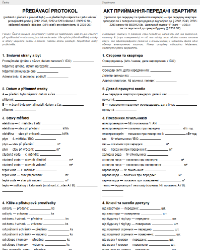
- When handing over the flat, record the condition of the walls, windows and bathroom in the handover protocol and attach photos. When the lease ends, the tenant returns the flat in the condition in which they took it over, apart from normal wear and tear and defects the landlord has to remove (Section 2293(1) OZ).
- Respond to a defect report within a reasonable time and have the cause checked. If the tenant caused the damage and does not repair it, you repair it at the tenant’s expense (Section 2267 OZ).
- A clause making the tenant bear all repairs, including defects of the building, will not help you. Terms that cut down the rights of a tenant of a flat are disregarded (Section 2235(1) OZ).
Read also
- Minor repairs in a rented flat: what the tenant pays and what the landlord pays article
- The heating does not work in a rented flat: when you can cut the rent and when you can leave without notice period article
- Security deposit (kauce) for a flat lease in Czechia: how much and when it is returned article