How to read Czech property listings: 1+kk, 2+1, OV, DV, PENB and other abbreviations
What the layouts 1+kk and 3+1 mean, personal versus cooperative ownership, floor area, floors, balcony and loggia, the energy class A to G, and what makes up the price of a rental or a purchase. For foreigners and for anyone who finds Czech listings confusing.
The listing says “2+kk, OV, 3. patro, výtah, PENB C” and you have no idea what it means? Czech has its own shorthand for housing, and a word-for-word translation does not help. Here is how to read a listing and what to ask before you go to a viewing.
1. Layout: what 1+kk, 2+1 or 3+kk means
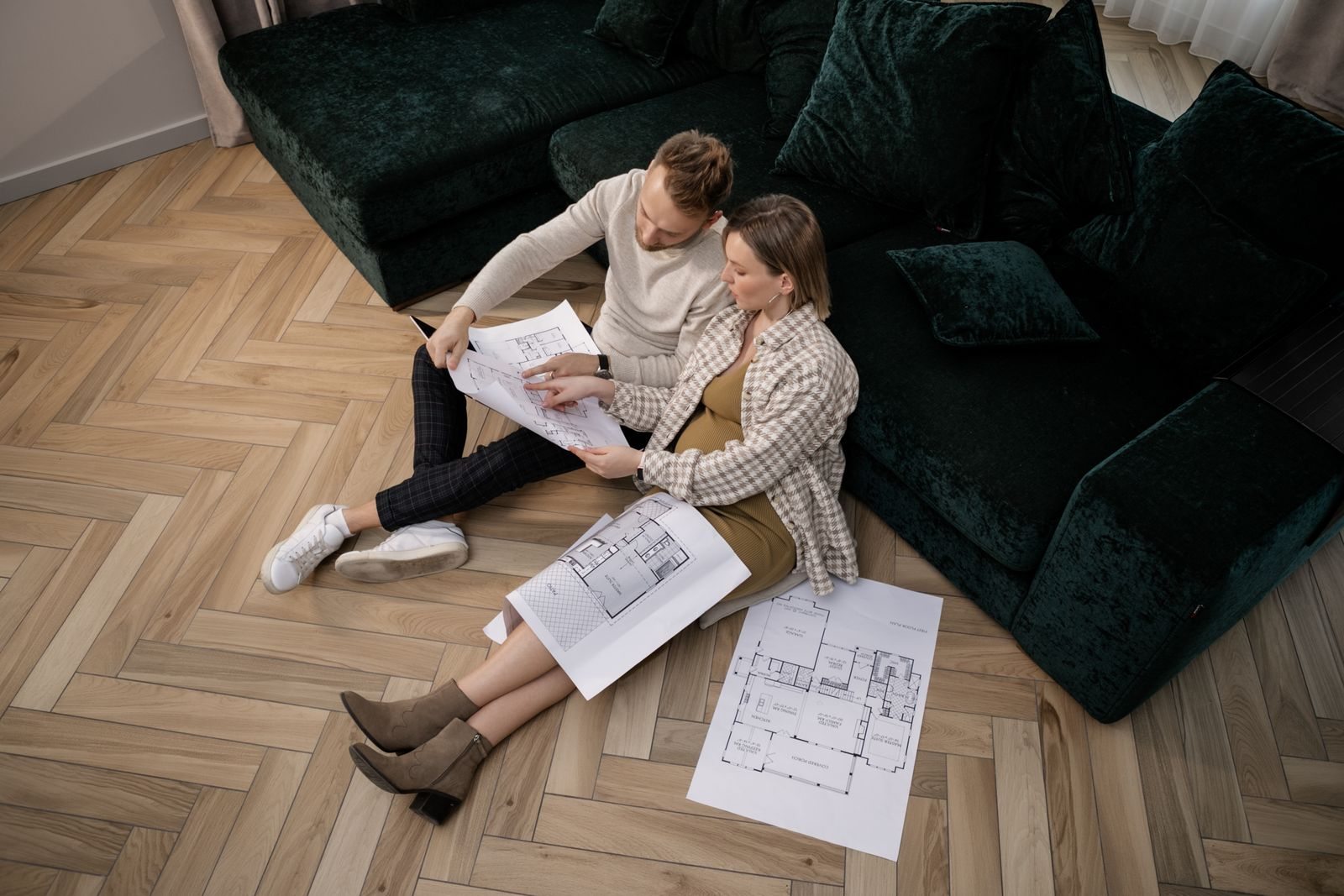
The number before the plus is the number of living rooms. After the plus comes the kitchen: “kk” (kuchyňský kout) is a kitchenette that is part of a room or open to it, and “1” is a separate kitchen with a door. The hall, bathroom, toilet and storeroom are not counted. The law does not define these labels, they are market custom, so borderline cases can differ.
- 1+kk: one room with a kitchenette (you sleep and live in it), a separate bathroom and toilet. Practical for one person or a couple.
- 1+1: one room and a separate kitchen with a door.
- 2+kk: two rooms, the kitchenette is usually in the living room.
- 2+1: two rooms and a separate kitchen, often with space for a dining table.
- 3+kk and 3+1: three rooms, the first with a kitchenette, the second with a separate kitchen.
- Garsoniéra (1+0): one room with a kitchen unit or cooker in it. In some older buildings the toilet or bathroom is shared in the corridor.
- A mezonet is a flat on two levels joined by stairs inside it, an attic flat is under the roof and has sloping walls.
The difference between “kk” and “+1” is mostly practical: with “kk” you cook in the same room where you sit or sleep (smells, noise), with “+1” the kitchen is separate. The same “2+kk” can be 40 or 70 m², so always ask for the floor area.
2. Floor area: what is counted
Listings show usable area, floor area, total area, or an area that includes the balcony, cellar or attic. Advertisers often count them differently, so the same number may not mean the same thing. Ask exactly what the number includes. When buying a flat in a building divided into units, ask for the floor plan and the floor-area figure: the owner’s declaration must be accompanied by floor plans together with the floor areas of the flats (Section 1166(2) OZ).
3. Floor, lift, balcony and cellar
- Přízemí is the entrance level. “1. patro” is the storey above it (British “first floor”, American “second floor”). New-build projects sometimes write “1. NP” (nadzemní podlaží, above-ground storey), and there the first storey is the ground floor itself.
- “3/5” usually means the 3rd storey of five.
- Lift or no lift: without a lift on a higher floor, expect to carry shopping and move furniture up the stairs. In a rental, the lift operation is often paid in service charges.
- A balcony juts out from the facade, a loggia is recessed into the building with walls on the sides, a terrace is a flat area on a roof or on the ground. The area of a balcony or loggia is often not included in the flat’s area.
- Cellar or cellar compartment and storeroom: storage outside the flat. Check in the contract whether it is part of the flat or only a right of use.
- A garage or parking space is often paid for separately in a rental.
4. OV and DV: who owns the flat and why it matters
OV means personal ownership (osobní vlastnictví). You buy a unit, that is the flat plus a share of the common parts of the building (Section 1158 OZ and Section 1159 OZ). The building is run by the owners’ association (SVJ), and each owner contributes to the management of the building and land in proportion to their share of the common parts, unless the declaration says otherwise (Section 1180(1) OZ). In practice this is a monthly payment, often called the “fond oprav” (repair fund).
DV means cooperative ownership (družstevní vlastnictví). The flat belongs to a housing cooperative, which is set up to meet the housing needs of its members (Section 727(1) of Act No. 90/2012 Coll.). You buy a membership share and hold a cooperative-flat tenancy, to which the Civil Code and the cooperative’s statutes apply (Section 741(1) of Act No. 90/2012 Coll.). So when buying, read the statutes and ask whether and on what terms the flat can be transferred to personal ownership. Banks may assess a mortgage on a cooperative flat and on a personally owned flat differently, so ask your bank in advance.
5. Condition, heating and furnishing
- Cihlový dům is a brick house, panelový dům (panelák) is a building assembled from concrete panels. They differ in sound and heat insulation and in layout, and panel blocks often have a so-called “bytové jádro” (bathroom and toilet made of standard units). Ask whether the building is insulated.
- Původní stav (original condition), po částečné rekonstrukci (after partial renovation), po kompletní rekonstrukci (after full renovation), novostavba (new build): the law does not define the condition. Ask when the wiring and pipes, windows and bathroom were replaced, and ask for photos.
- Heating can be district heating (from a central heating plant), a gas boiler in the flat, electric panel heaters or local stoves. It determines your monthly costs.
- Zařízeno (furnished), částečně zařízeno (partly furnished), nezařízeno (unfurnished): “nezařízeno” sometimes means only a fitted kitchen, sometimes an empty flat. Have the list of equipment written into the handover protocol.
6. PENB: energy class A to G
The PENB (průkaz energetické náročnosti budovy, energy performance certificate) places a building in classes A to G (Decree No. 264/2020 Coll.): A is exceptionally economical, G is exceptionally wasteful. The class shows how much energy the building needs, so roughly what you will pay for heating. The owner of a unit must show the certificate to a prospective buyer or tenant before the contract is concluded and hand it over at the latest at signing, and the class must appear in the advertisement (Section 7a(3) of Act No. 406/2000 Coll.). If an estate agent does not receive the graphic part of the certificate, the agent states the worst class in the advertisement (Section 7a(2) of Act No. 406/2000 Coll.). So a class G in a listing sometimes just means the certificate was not handed over, not necessarily a bad building.
7. Money: rent, services, deposit, commission
- Rent is the price of the flat itself. Ask whether the amount is “bez služeb a energií” (without services and energy) or “včetně” (including). Work out the total monthly payment in advance.
- Advance for services: water, heating, lift, cleaning and waste are paid in advance, and after the billing period (at most 12 months) comes a statement of actual costs (Section 2(1) of Act No. 67/2013 Coll.). You may owe a top-up or get a refund.
- Electricity and gas are often paid separately by consumption, and the listing says “bez energií”.
- Deposit (kauce, jistota): the deposit and a contractual penalty together must not exceed three times the monthly rent (Section 2254(1) OZ).
- Estate agent’s commission: paid by the client (zájemce) who agreed to pay it in the brokerage contract (Section 2445(1) OZ). A consumer cannot be obliged to conclude the real-estate contract (Section 14 of Act No. 39/2020 Coll.). Ask in advance who pays the commission and when.
- When you buy through an agent, the agent must give you an extract from the public register (land register) for the property at the latest on the day the brokerage contract is concluded (Section 11(1) of Act No. 39/2020 Coll.).
8. What to ask before a viewing
- What is the total monthly payment including services and energy?
- What is the exact floor area and what does it include (balcony, cellar, attic)?
- Is the flat OV or DV? What is the monthly payment to the repair fund or to the cooperative?
- What is the PENB class, and can I get the certificate before signing?
- From when is the flat available, how much is the deposit, and in what language will the contract be (and which version prevails)?
- Is there a lift, which floor is it, does the flat come with a cellar or parking?