The heating does not work in a rented flat: when you can cut the rent and when you can leave without notice period
Who deals with a broken heating system in a lease, what the law says about a rent reduction and leaving without a notice period, what an energy performance certificate does (not) mean and how to check heating advances.
Fifteen degrees in the flat and the landlord is silent? The rent does not necessarily stay at the full amount, but the law gives the right to a rent reduction and to leave without a notice period only to someone who does one thing first. What is it, and what else applies to heating in a lease?

1. Who deals with it: it depends on where the heat comes from
The landlord keeps the flat and the building in a condition fit for use throughout the lease (Section 2257(1) OZ). The tenant carries out and pays for routine maintenance and minor repairs only (Section 2257(2) OZ). Heating in winter belongs to the use of a flat, so repairing central heating is the landlord’s matter, not yours.
- Radiators and central heating pipes are not a minor repair; the landlord pays for them (Government Regulation No. 308/2015 Coll., Section 4(h)).
- Repairs of a flat’s own gas or electric boiler, flues, valves and thermostats are minor repairs and the tenant pays for them (Government Regulation No. 308/2015 Coll., Section 4(h)); regular inspections and cleaning of the boiler are routine maintenance (Government Regulation No. 308/2015 Coll., Section 2).
- Other repairs are minor only if one repair does not exceed CZK 1,500 (Government Regulation No. 308/2015 Coll., Section 5).
- The contract may say something different, so read what it says about repairs before you pay anything.
2. How warm it should be and what you can measure
Decree No. 194/2007 Coll. sets rules for heating and the supply of heat (Section 1 of Decree No. 194/2007 Coll.). The heating period runs from 1 September to 31 May (Section 2(1) of Decree No. 194/2007 Coll.). Annex 1 gives the design temperatures: living rooms and kitchens 20 °C, bathrooms 24 °C, hallways and corridors 15 °C. A heat supplier does not heat a flat with its own boiler; there the law sets no specific temperature and what counts is whether the flat is in a condition fit for use (Section 2257(1) OZ). The decree’s figures help there only as a rough comparison. For details on temperatures, on when heating starts and on central heating, see our article “Heating season in a rented flat”.
- Measure the temperature in the middle of the room, 1 m above the floor, at 8:00, 12:00, 16:00 and 21:00 and work out the average; that is how the decree describes measuring the average temperature (Section 2(8) of Decree No. 194/2007 Coll.).
- Compare it with the building’s design temperature, not just “twenty degrees”: in a room with one external wall the measured value is to be 1 °C above the design value (Section 2(10) of Decree No. 194/2007 Coll.).
- Note the date, room and result, and take a photo of the thermometer.
3. The first step that everything depends on: a written notice
A defect that must be remedied without delay is reported to the landlord immediately; any other defect that prevents normal living, without undue delay (Section 2264(1) OZ). Heating that does not work at all in a frost belongs rather to the first group. This provision does not prescribe a form for the notice, but proof of delivery helps you: send an email or a letter so that sending can be proved, and check which way of giving notice the contract sets.
- Say exactly what does not work, since when, which temperatures you measured and what you ask for (a repair, and by when).
- Attach photos and the measurements.
- Keep a copy and proof of sending or receipt.
- If the landlord replies, keep the reply too.
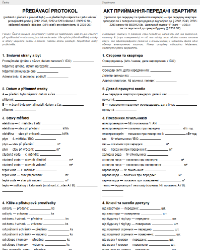
- At the viewing and handover, record the state of the heating and meters in the handover protocol; later it serves as your starting point.
4. What you may do when the landlord does nothing
- The landlord has to remedy a defect within a reasonable time after you report it (Section 2265(1) OZ).
- If the landlord does not remedy it without undue delay and properly, you may have it remedied yourself and claim reimbursement of justified costs, or a rent reduction, unless the defect is not substantial (Section 2265(2) OZ). The law gives no figure for a “reasonable reduction” (Section 2208(1) OZ).
- If a defect makes use seriously difficult or impossible, you have the right to a rent waiver or may terminate the lease without a notice period (Section 2208(1) OZ, the general provisions on leases).
- To terminate a flat lease because the landlord did not remedy the defect even within an additional period, the defect must be one you are not responsible for, and the delay or the defect itself must be a gross breach of the landlord’s duties (Section 2266 OZ). So set the landlord a reasonable additional period in writing.
- Claim a reduction or waiver within six months from the day you found or could have found the defect; otherwise the court will not grant it if the landlord objects (Section 2208(3) OZ).
- If you do not report a defect without undue delay after you should and could have found it, you have no right to reimbursement of costs; if you remedy it yourself, you have no right to a rent reduction either (Section 2265(3) OZ).
Watch out for the most common mistake: do not cut the rent unilaterally without first telling the landlord in writing and giving reasons. Setting off your own claim against the rent is limited to one month’s rent (Section 2208(2) OZ). And a dispute about the rent cannot lead to termination for non-payment if you place the disputed rent in notarial escrow and inform the landlord (Section 2253(1) OZ).
5. Cold even though the heating is on: what the energy performance certificate says
The energy performance certificate (PENB) places a building in classes A to G (Section 9(5) of Decree No. 264/2020 Coll.). It is based on calculated energy consumption, which the decree derives from the energy needed for typical use of the building, including the efficiency of technical systems (Section 2 letter h) of Decree No. 264/2020 Coll.). The Act also defines the energy performance of a building as the calculated amount of energy needed to cover the energy needs connected with using the building (Section 2(1) of Act No. 406/2000 Coll., letter f)). So a good class says something about the building’s energy consumption, but it is not a measured temperature in your flat and does not guarantee that it will be warm.
- A flat owner must show the certificate or a copy of it to a prospective tenant before the contract is concluded and hand it over at the latest when the lease is signed (Section 7a(3) of Act No. 406/2000 Coll., letters a) and b)). The certificate is valid for 10 years from issue, or until a major change to the building or a change in the heating method (Section 7a(4) of Act No. 406/2000 Coll.).
- The class has a different practical effect in a lease: the service provider sets the basic component of heating costs, 40 to 60 %, by the class of the building’s average heat transfer coefficient (Section 3(1) of Decree No. 269/2015 Coll.).
- If the certificate is in order and it is still cold, treat it as a defect of the flat: measure the temperatures, write to the landlord and have the cause assessed by an expert. The steps from sections 3 and 4 apply in the same way.
6. The landlord wants high heating advances: how to check them
The amount of the advances is agreed in the contract (Section 4(1) of Act No. 67/2013 Coll.). If nothing is agreed, the landlord sets the monthly advance as a monthly share of the expected annual costs from the past year or the last settlement period, or from costs derived from the expected prices of the current year (Section 4(2) of Act No. 67/2013 Coll.). So the Act sets no numerical ceiling, but it says what to base the advance on. That is also your test: ask for last year’s statement or the calculation.
- The landlord must announce an increase of the advance during the year in writing and justify it properly, otherwise the increase does not take effect; it can be payable from the first day of the month following delivery of the notice at the earliest (Section 4(4) of Act No. 67/2013 Coll.). Agreements on services under this Act must be in writing (Section 1(4) of Act No. 67/2013 Coll.).
- In a lease concluded for more than 24 months or for an indefinite period, the supply of heat cannot be included in a flat-rate payment; payments for it must always be settled by a statement (Section 9(4) of Act No. 67/2013 Coll.). If such a contract charges you a flat rate for heat, that does not match the law.
- The landlord settles actual costs and advances for the settlement period and delivers the statement within 4 months of its end at the latest (Section 7(1) of Act No. 67/2013 Coll.). Where remotely readable heat meters are installed, the landlord delivers information on your recorded heat consumption (Section 8a(1) of Act No. 67/2013 Coll.).
7. The statement has arrived: deadlines that do not wait
- Within 30 days of delivery of the statement you can ask in writing for documentation of the costs, the way they were allocated, how the advances were set and how the statement was prepared, and for copies of the documents; the landlord complies within 30 days of the request being delivered (Section 8(1) of Act No. 67/2013 Coll.).
- You submit objections to the method and content of the statement to the landlord within 30 days of delivery of the statement or, where documents are provided, of that documentation; if you do not object in time, you are deemed to agree (Section 8(2) of Act No. 67/2013 Coll.). The landlord must deal with objections made in time within 30 days of their submission (Section 8(2) of Act No. 67/2013 Coll.).
- Payment alone is not an objection. So do not put off written objections until after you have paid.
- The financial settlement takes place within the agreed period, at the latest within 4 months of delivery of the statement; defects in the statement do not affect when an overpayment falls due, and they do not affect when an underpayment falls due unless they change its amount (Section 7(3) of Act No. 67/2013 Coll.).
- If the landlord does not deliver the statement in time or does not meet the duties connected with inspection of documents and handling of objections, the landlord must pay a penalty of at most CZK 50 for each started day of delay (Section 13(1) and (2) of Act No. 67/2013 Coll.).
Missed the deadline? The Act then presumes your consent (Section 8(2) of Act No. 67/2013 Coll.); whether you can defend yourself in another way is for a lawyer or a court to assess. the general limitation period is three years (Section 629(1) OZ). Note also that this Act does not apply to services that the recipient arranges without the provider’s involvement (Section 1(3) of Act No. 67/2013 Coll.), so, for example, your own gas boiler with gas supplied in your name is not settled under it.