Got a letter about EET 2.0 in your data box? What to do with it
The Financial Administration is sending companies a letter about sales recording from 1 January 2027. No reply is needed. We explain in detail which payments are recorded, the exceptions, what to do with a one-off cash payment and how to sign up in DIS+.
In November 2026, companies are receiving a letter from the Financial Administration in their data box, “EET 2.0 – ověřte si, zda se Vás týká”, with the leaflet “Začněte s EET 2.0 v 5 krocích”. Sales recording under Act No. 180/2026 Coll. starts on 1 January 2027. Work through this guide and in a few minutes you will know whether you need to do anything.
1. What the letter is
It is an information notice sent to everyone, not a summons or a decision. It sets no deadline and needs no reply. Its purpose is to make you check in good time whether you will have to record sales. Recording applies to individual and corporate income taxpayers (Section 2(1) of Act No. 180/2026 Coll.), for sales made in the Czech Republic (Section 2(2) of Act No. 180/2026 Coll.). That is why even an s.r.o. that never takes cash receives the letter.
2. What matters is how the customer pays
You record only a contact payment that is business income. A contact payment is made in personal contact with you, or at your premises or in your vehicle (Section 6(1) of Act No. 180/2026 Coll.). The payment method is broad: for example cash, transfer, card, cryptocurrency, cheque, meal voucher or gift voucher (Section 5(1) of Act No. 180/2026 Coll.). Cash and other payments in physical form are contact payments even without a meeting, except cash on delivery that the post office transfers to your account (Section 6(2) of Act No. 180/2026 Coll.).
- The customer hands you cash at a meeting: you record it.
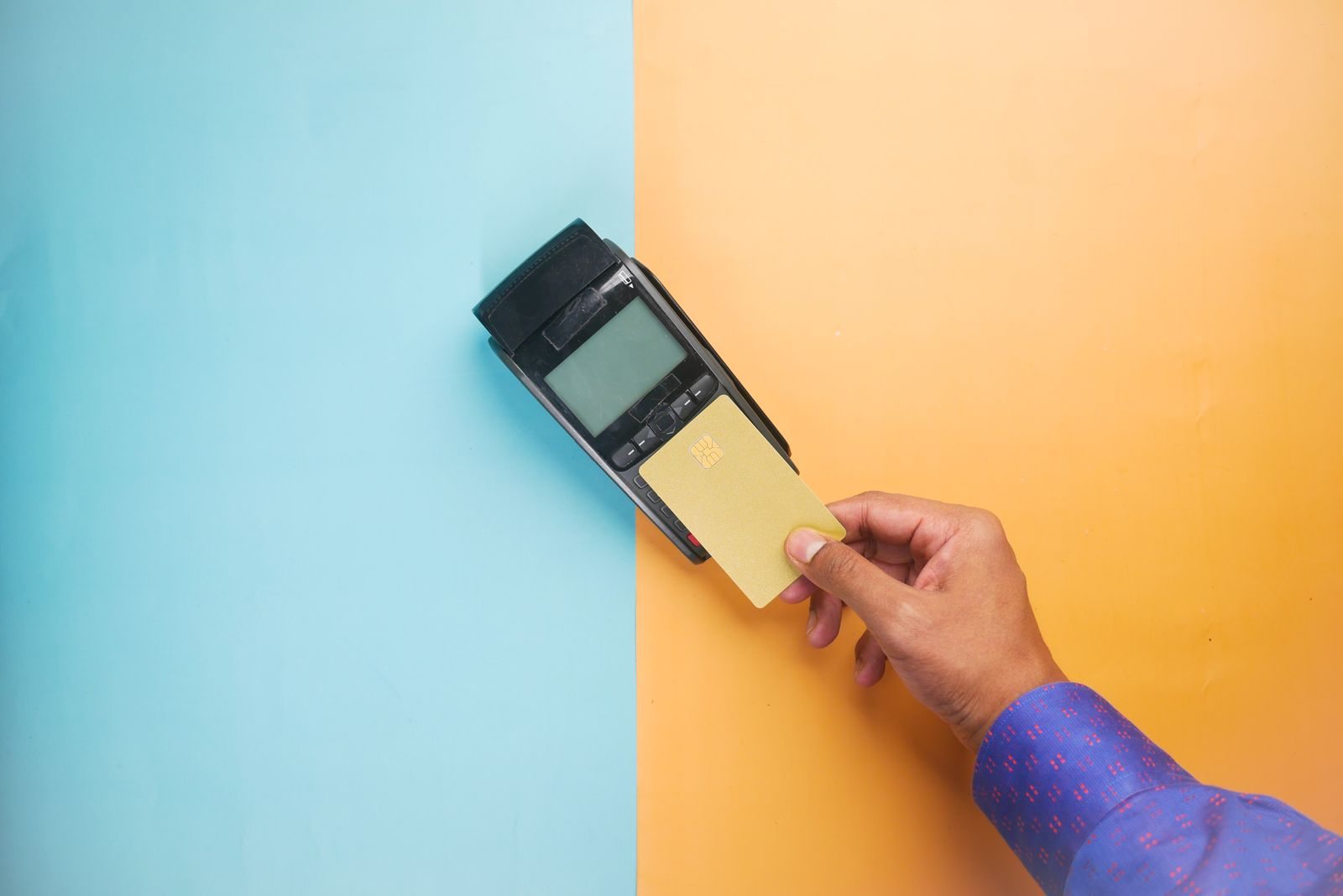
- The customer taps a card on your terminal, or scans a QR code in front of you and pays by transfer: you record it.
- The customer pays your invoice by transfer from home or the office: you do not record it. The Financial Administration’s letter says the same.
- The customer pays in your e-shop through a payment gateway: according to the Financial Administration (eet.gov.cz, “Kdo musí evidovat tržby?”, point 1.8, checked 12 November 2026), you do not record it.
- Watch out for deposits: a payment taken from a deposit that a tenant or customer paid in cash or by another contact payment also meets the formal criteria of a recorded sale (Section 5(2) of Act No. 180/2026 Coll.). You record it if it is business income.
3. Exceptions: when you do not have to record
- One-off income: a company does not record income that is “one-off in terms of the sales it usually receives” (Section 7(1) of Act No. 180/2026 Coll., letter (b), point 2). According to the Financial Administration’s letter, this does not apply when you expect contact payments and there are simply few of them.
- A new s.r.o.: sales until a tax ID (DIČ) is assigned and for 10 days after (Section 13(1) of Act No. 180/2026 Coll.).
- Certain entities: for example the state, municipalities, banks, insurers, investment and pension companies (Sections 11(1) and 11(2) of Act No. 180/2026 Coll.).
- Certain sectors: for example gambling, licensed energy, water supply and sewerage, non-bank consumer credit, payment institutions, electronic money institutions, non-performing loan servicers and providers of crypto-asset services (Section 12(2) of Act No. 180/2026 Coll.).
- Non-profits: minor secondary business activity of public-benefit taxpayers is not recorded (Section 12(1) of Act No. 180/2026 Coll., letter (a)). According to the Financial Administration’s letter, larger secondary activity is.
- Vending machines (Section 13(2) of Act No. 180/2026 Coll.).
- Self-employed people in band 1 of the flat-rate regime who sign up for the surcharge, known as EET OFF (Section 11(3) of Act No. 180/2026 Coll.). This option does not exist for an s.r.o.
4. A customer insists on cash, as an exception
If you do not normally take cash and this is a single exception, you do not have to record it in EET. You must still capture it in your accounts. Here is how:
- Issue a cash receipt (příjmový pokladní doklad). It must show the document reference, the content of the payment and its party, the amount, the moment the document is drawn up and the moment the payment is received, the signature of the person responsible for the transaction and the signature of the person responsible for booking it (Section 11(1) of Act No. 563/1991 Coll.). Give a copy to the customer.
- Enter the payment in the cash book and pass the receipt to your accountant.
- Pay the money into the company account without undue delay.
- You may not accept more than CZK 270,000 in cash from the same payer in one day (Section 4(2) of Act No. 254/2004 Coll. and Section 4(4) of Act No. 254/2004 Coll.).
- If the exception becomes a habit, it is no longer one-off income. Then sign up for EET before you accept the next such payment.
- It is up to you to assess whether the income is one-off. If it turns out that you should have recorded the sale, failure to send the data carries a fine of up to CZK 500,000 (Section 24(2) of Act No. 180/2026 Coll.). If in doubt, sign up for EET in advance.
5. EET does not apply to you: what to do
- Read the letter in your data box and keep it. You send nothing.
- You do not sign up for EET. Recording units only have to be reported by someone who makes recorded sales in at least one of them (Section 15(1) of Act No. 180/2026 Coll.).
- Take payments to your account against an invoice with a QR code that the customer pays after the meeting.
- Agree within the company that cash, card and QR payments are not normally accepted at meetings, and write down the procedure for an exception from point 4.
6. EET applies to you: 5 steps from the Financial Administration leaflet
- Log in to your company’s DIS+ tax information box on the MOJE daně portal, tile Online finanční úřad. According to the leaflet, you log in with a citizen identity (bank identity, eObčanka), your data box login or credentials from the Financial Administration.
- Activate the EET service in DIS+. According to the leaflet, this is possible from 1 November 2026 (Section 29 of Act No. 180/2026 Coll.).
- Under Správa evidenčních jednotek, report all recording units (Section 15(1) of Act No. 180/2026 Coll.): premises, e-shop or app, vehicle, or yourself if you work outside them (Section 3 of Act No. 180/2026 Coll.).
- Under Pokladní certifikáty, generate a sales recording certificate (Section 14(1) of Act No. 180/2026 Coll.). Protect it from misuse and report any misuse without undue delay (Section 14(4) of Act No. 180/2026 Coll.).
- Set up a device: a phone, tablet, computer or a till connected to the internet. If you have a till, discuss the EET 2.0 update with your supplier. The Financial Administration is preparing a free web app, MOJE eet, from 1 December 2026, which obtains the certificate itself. According to the letter it may not suit everyone, for example VAT payers.
7. Key dates
- From 1 November 2026: EET activation in DIS+ (Financial Administration leaflet).
- From 1 December 2026: the free MOJE eet app (Financial Administration letter).
- 1 January 2027: sales recording begins.
8. Where to ask
The Financial Administration helpline 953 109 109 (Mon–Thu 9–17, Fri 9–14), eet.gov.cz with its “Koho se EET týká” section and a login video guide, answers to public questions at app.fs.gov.cz and the contact form at eet.gov.cz/cs/kontakty. How to send the data at the moment of payment, EET OFF for the self-employed and fines are explained in our article, “EET 2.0 from 1 January 2027: a checklist for tradespeople”.
Read also
- How to start as a sole trader in Czechia: step by step article
- Someone used your photos without permission: how to fight back on Facebook, Instagram and in listings article
- Sole trader or limited company (s.r.o.)? What to choose when starting a business in Czechia article
- EET 2.0 starts on 1 January 2027: who must record sales and how to prepare news