Blackout, crisis and civil protection in Czechia: supplies, shelters, masks and who to contact
What the Ministry of the Interior and the fire service recommend for the first 72 hours of a crisis, how the state of danger and the state of emergency work, where to find the shelter map, who issues protective masks and how the state organises civil protection.
Social media is full of videos about blackouts, nuclear winter and the end of the world. Many simply scaremonger without citing any source. Real preparedness is boring: water, food, a radio, cash and knowing who is responsible for what in Czechia. Here is an overview based on the rules in force and official recommendations.
1. The 72-hour rule: what the state recommends
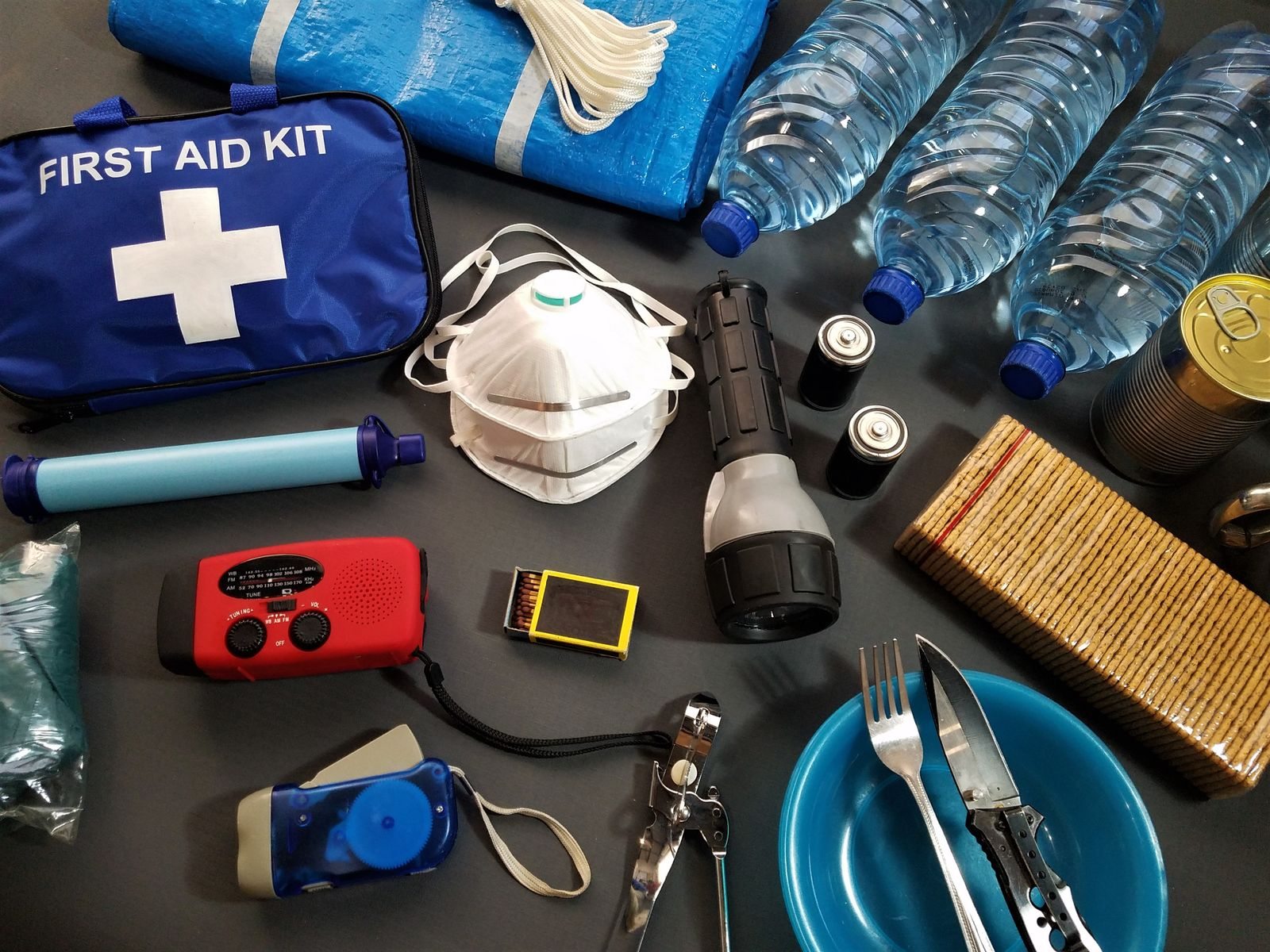
The Ministry of the Interior and the Fire Rescue Service of the Czech Republic run the 72 hours project (www.72h.gov.cz). It assumes that a household should manage the first three days of a crisis, for example without electricity, water or internet, on its own. This is the authority's guidance, not a legal duty.
- Water: in an emergency an adult manages on 2 litres a day for drinking; including hygiene and cooking, plan for 10 to 15 litres per person per day. Drink only bottled water or water from tankers, and have containers (canisters with a lid) ready in advance.
- Food: long-life food that needs no cooking (couscous or instant porridge, for example, can simply be soaked in cold water).
- Medicines and a first-aid kit: the medicines you need for one week.
- A battery radio and torch, a charged power bank and spare batteries.
- Cash in coins and notes (cards and cash machines do not work during a power cut).
- Copies of important documents, hygiene items, pet food, a full car tank.
- Stand-alone smoke and gas detectors (carbon monoxide), and a fire extinguisher or fire blanket if you use a camping stove or grill.
2. What to do during a power cut
- Unplug appliances; the simplest way is to switch off the main circuit breaker.
- Open the fridge and freezer as little as possible, eat thawed food quickly, and refreeze it only after cooking.
- Cook outdoors on a camping stove or grill and handle fire with care.
- Heat one room only: close the doors to the others, wear layers, and everyone sleeps in the same room. Do not drink alcohol.
- Make calls only when necessary, because the mobile network may be overloaded. Keep the phone numbers of your loved ones written on paper.
- Tap water can be drunk during a power cut unless the municipality announces otherwise. Flush the toilet only when needed.
- Stay away from damaged power lines and report them to the municipality or the network operator.
3. How the state declares a crisis
The Crisis Act distinguishes a state of danger, a state of emergency and a state of threat to the state (Act No. 240/2000 Coll., Section 2(b)). A state of danger is declared by the regional governor (in Prague by the mayor) only for as long as strictly necessary, at most 30 days, and it can be extended only with the government's consent (Act No. 240/2000 Coll., Section 3(1), Section 3(3) and Section 3(4)). A state of emergency is declared by the government (Constitutional Act No. 110/1998 Coll. on the Security of the Czech Republic, Article 5(1)). Where delay is dangerous, the Prime Minister may declare it and the government approves or cancels that decision within 24 hours (Article 5(3) of the same Act).
During a state of emergency, only for as long and to the extent strictly necessary, freedom of movement and ownership rights can be restricted, with appropriate compensation (Act No. 240/2000 Coll., Section 5). The government may order an evacuation or impose a work duty or an obligation to provide material resources (Act No. 240/2000 Coll., Section 6(1)). Look for decisions on the official notice boards of the municipality and the region, the local public address system, Czech Radio and Czech Television.
4. Your duties and rights during a rescue operation
- You have the right to information about measures to protect the population (Act No. 239/2000 Coll., Section 25(1)).
- You must tolerate restrictions ordered by the incident commander and, when called upon by the mayor or the commander, provide personal or material assistance (Act No. 239/2000 Coll., Section 25(2)). You may refuse if it would endanger your life or health or that of others (Act No. 239/2000 Coll., Section 25(3)).
- Persons under 18 or over 62, persons medically unfit for the work, and persons who would expose themselves or a close person to serious danger are exempt from personal assistance (Act No. 239/2000 Coll., Section 26(2)).
- For personal or material assistance and for restriction of ownership or use rights, the regional office pays monetary compensation within 6 months of the end of the work (Act No. 239/2000 Coll., Section 29(1)).
5. Civil protection: who provides it in Czechia
Protection of the population (in the Act, civil protection) covers warning, evacuation, sheltering, emergency survival and other measures to protect life, health and property (Act No. 239/2000 Coll., Section 2(e)). The details are set by Decree of the Ministry of the Interior No. 380/2002 Coll. on the preparation and performance of population protection tasks. According to the Fire Rescue Service, it plays the central role and its General Directorate within the Ministry of the Interior coordinates ministries, regions and municipalities.
- The municipal office arranges warning, evacuation and sheltering of people, takes part in ensuring residents' emergency survival, manages civil protection supplies and keeps the register and checks of civil protection structures in the municipality (Act No. 239/2000 Coll., Section 15(2)). It also informs residents about possible threats and organises their training (Act No. 239/2000 Coll., Section 15(4)).
- The mayor, during an operation, warns persons in the municipality, organises evacuation and the municipality's activity under emergency survival conditions, and may call for personal or material assistance (Act No. 239/2000 Coll., Section 16).
- The regional Fire Rescue Service keeps the register of permanent shelters in the region and checks their condition, and the shelter owner is responsible for its technical condition (guidance of the Fire Rescue Service, Sheltering of the population page).
- The manner and extent of sheltering are set by a sheltering plan that is part of the emergency plan (Decree No. 380/2002 Coll., Section 16(1)).
- According to the Fire Rescue Service (3 March 2026), a new Population Protection Concept, amendments of sheltering rules and projects such as Cell Broadcast and Safety Towns in the regions are being prepared. These are plans, not rules in force.
6. Sirens and warnings
- The General Alert is the only warning signal: an undulating tone lasting 140 seconds that can sound up to three times with pauses of about three minutes.
- The siren test is not a warning: a continuous tone for 140 seconds, usually on the first Wednesday of the month at 12:00.
- The fire alarm (an intermittent tone for one minute) summons volunteer fire brigades.
- After the General Alert, take cover at once in the nearest masonry building or stay where you are, close and seal windows and doors, switch off ventilation and air conditioning and turn on the radio or TV (a battery radio in a power cut). Do not collect children from school. If a flood is imminent, do not shelter in a building but move to higher ground.
- Warnings also come through Czech Radio and Czech Television, localised SMS from the Fire Rescue Service (no registration needed), the municipal public address system, the websites and social media of the fire service, police and municipality, or apps such as Záchranka. Cell Broadcast is being introduced and is to be available from the end of 2026.
Note the difference in guidance: the Fire Rescue Service page on warnings advises, after the General Alert, upper floors in the middle of the building without windows and avoiding cellars, while its page on sheltering names a basement or cellar for an improvised shelter. What applies right now is always clarified by the instruction on the radio, TV or from the municipality.
7. Bomb shelters: which exist and where to find them
Sheltering of the population in emergencies is provided in improvised and permanent shelters (Decree No. 380/2002 Coll., Section 16(2)). Permanent shelters are permanent protected spaces in the underground part of buildings or free-standing structures (Decree No. 380/2002 Coll., Section 16(4)). They are divided into pressure-resistant (against weapons of mass destruction) and non-pressure-resistant (against radiation, radioactive dust and partly against pressure), and protective systems of underground transport structures (Decree No. 380/2002 Coll., Section 16(5) to (7)).
- Czechia has just under 1,600 permanent shelters with a capacity of roughly 310,000 people (about 3 % of the population). The metro protective system has a theoretical capacity for another 332,000 people and the Strahov tunnel for 15,000 (Fire Rescue Service, 3 March 2026).
- Permanent shelters are intended for a state of threat to the state and a state of war, bringing them into operation takes tens of hours (some weeks), and they are not used for ordinary emergencies such as floods.
- The Fire Rescue Service does not plan to expand permanent shelter capacity, which would require high costs and decades of construction.
- The basis is improvised sheltering: staying in a building or a pre-selected and adapted space (cellar, basement, vaulted room with as few windows as possible, reinforced walls and ceilings, covered windows, controlled ventilation, stocks of water and food).
- A shelter should be within walking distance, ideally 500 to 800 m (guidance of the Fire Rescue Service).
The map of permanent shelters is public: the Fire Rescue Service publishes it on its Sheltering of the population page under Shelter locations. Clicking a red dot shows the shelter's capacity, resistance and purpose. For Prague there is a map on the capital's safety portal. Private shelters built in recent years may not be in the Fire Rescue Service register. Check the shelter near you also with your municipal office, which keeps the register of civil protection structures in the municipality (Act No. 239/2000 Coll., Section 15(2)).
8. Protective masks and suits and where to get them
Personal protective equipment is issued only in a state of threat to the state and in a state of war, and only to selected persons: protective bags for children up to 18 months, protective jackets for children from 18 months to 6 years, protective masks for children from 18 months to 18 years, and protective masks for persons in health and social care facilities and the people accompanying them (Decree No. 380/2002 Coll., Section 17(2)). In ordinary emergencies, such as a chemical or radiation accident, it is not issued and improvised protection of airways, eyes and body surface from available items is used (Decree No. 380/2002 Coll., Section 17(1)).
- According to the Fire Rescue Service, the state will not provide a protective mask for every citizen. Others can buy them in specialised shops. An official list of shops could not be verified on the Fire Rescue Service website, so ask your regional fire and rescue service.
- Official Fire Rescue Service sources do not mention protective suits for the public. They recommend improvised protection: a respirator, mask or damp scarf over the mouth and nose, close-fitting goggles, head covering, airtight clothing with long sleeves and trousers, a raincoat or long coat, gloves, sturdy footwear, and sealing at the neck, sleeves and trouser legs.
- After returning from a contaminated environment, remove outer clothing, preferably in the hallway, seal it in a plastic bag, shower if possible and put on clean clothes, clean your ears and nose and rinse your eyes with clean water.
- If hazardous substances are released, do not go outside, close and seal windows and doors, switch off ventilation and air conditioning and follow the radio and TV.
9. What EU law says
There is no single European law on civil protection of the population. The Union Civil Protection Mechanism supports solidarity between Member States through practical cooperation and coordination, without prejudice to the primary responsibility of Member States for protecting the population (Decision No 1313/2013/EU, Article 1(3), as amended by Regulation (EU) 2021/836). EU rules mainly address states and operators, not individual households.
- Decision No 1313/2013/EU on a Union Civil Protection Mechanism, as amended by Regulation (EU) 2021/836: protection of people, the environment and property against natural and man-made disasters, including technological and radiological ones (Article 1(2)).
- Regulation (EU) 2019/941 on risk-preparedness in the electricity sector (blackout): a Member State designates a competent authority (Article 3), identifies national electricity crisis scenarios (Article 7) and draws up a risk-preparedness plan, updated every four years (Article 10(8)). The plan must describe mechanisms for informing the public of a possible crisis and a framework for manual load shedding, including categories of users entitled to special protection against disconnection (Article 11(1)(h) and (i)).
- Directive (EU) 2018/1972, Article 110: where public warning systems for imminent or developing major emergencies are in place, providers of mobile number-based interpersonal communications services must, from 21 June 2022, transmit public warnings to the end users concerned. Mobile warnings therefore have an EU basis, and Czechia is introducing them (see section 6).
- Directive (EU) 2022/2557 on the resilience of critical entities: Member States were to identify critical entities by 17 July 2026 (Article 6(1)) and were to adopt implementing measures by 17 October 2024 (Article 26(1)). It concerns operators of essential services, not citizens.
- EU Preparedness Union Strategy, Joint Communication JOIN(2025) 130 of 26 March 2025: a non-binding document. According to it, the Commission intends to propose guidelines to reach population self-sufficiency of at least 72 hours (the action plan sets 2026 as the timeline).
None of these provisions obliges you, as a citizen, to keep supplies or a shelter. Supplies are recommended by Czech authorities (the 72 hours project), and the EU strategy is for now only a policy framework.
10. Who to contact
- 112: emergency call. 150: Fire Rescue Service, 155: ambulance, 158: Police of the Czech Republic. When life or health is at risk call the emergency lines; otherwise, in a crisis phone only when you must.
- The municipal office and mayor: warnings, shelters in the municipality, water distribution points and phone charging, notice board, public address system and apps.
- The regional Fire Rescue Service: register and checks of permanent shelters, questions about protective equipment (contacts on the Basic contacts of the Fire Rescue Service page).
- The regional office: application for compensation under Act No. 239/2000 Coll., Section 29.
- Ministry of the Interior: [email protected], questions about the 72 hours project.
- Czech Radio and Czech Television: official information in a crisis.
Official links
- Ministry of the Interior: the 72 hours project
- Fire Rescue Service: sheltering of the population and map of permanent shelters
- Interactive map of permanent shelters (Fire Rescue Service)
- Prague: map of shelters and sirens
- Fire Rescue Service: personal protective equipment
- Fire Rescue Service: warning of the population and siren signals
- Fire Rescue Service: contacts of the regional fire rescue services
- EUR-Lex: Regulation (EU) 2019/941 on risk-preparedness in the electricity sector
- EUR-Lex: Directive (EU) 2018/1972, Article 110 (public warning)
- EUR-Lex: Directive (EU) 2022/2557 on the resilience of critical entities
- EUR-Lex: Preparedness Union Strategy JOIN(2025) 130
Read also
- How to file a criminal complaint with the Czech police: step by step, with a free template article
- Foreigners and the Czech police: your right to your own language and an interpreter, even at night article
- Your rights during a police intervention in Czechia: the officer's number, filming and complaints article