Chimney sweep and boiler before winter: who pays in a rented flat and what happens without the report
The heating season is in full swing. How often the flue must be cleaned and checked for gas and for solid fuel, who pays for it in a rented flat, and which document to ask the chimney sweep for.
Cleaning, checking and inspecting a chimney are not voluntary. Under the Fire Protection Act, the operation of a flue way counts as satisfactory for the protection of health, life and property only if these tasks are carried out in the way the Act sets out (Section 43(1) of Act No. 133/1985 Coll., on Fire Protection). A flue way means a cavity designed to carry combustion gases into the open air; the Act does not treat as a flue way the discharge from local under-window heaters with a rated output of up to 7 kW vented through the façade (Section 43(2)).
The intervals depend on the fuel. For an appliance with an output of up to 50 kW inclusive, the flue way is checked once a year, whatever you burn. Cleaning is more frequent with solid fuels: three times a year with year-round operation, twice a year with seasonal operation. With liquid fuels it is twice and once a year respectively, and with gaseous fuels once a year (Section 4(1) and Annex 2 of Decree No. 34/2016 Coll.). For a condensing gas appliance, the flue way is cleaned and checked at least once every two years (Annex 2, point 9 of the same Decree).
Who may do the work. Cleaning and checking are carried out by a person holding a trade licence in chimney sweeping; an inspection may be done only by a flue way inspection technician (Sections 44(1) and 45(1) of the Fire Protection Act). You may clean the flue way of a solid-fuel appliance with an output of up to 50 kW inclusive yourself (Section 44(2)). After the work, the authorised person must hand over a written report within 10 working days at the latest (Section 47(1)). Keep the report — it is the document that proves the duty was met.
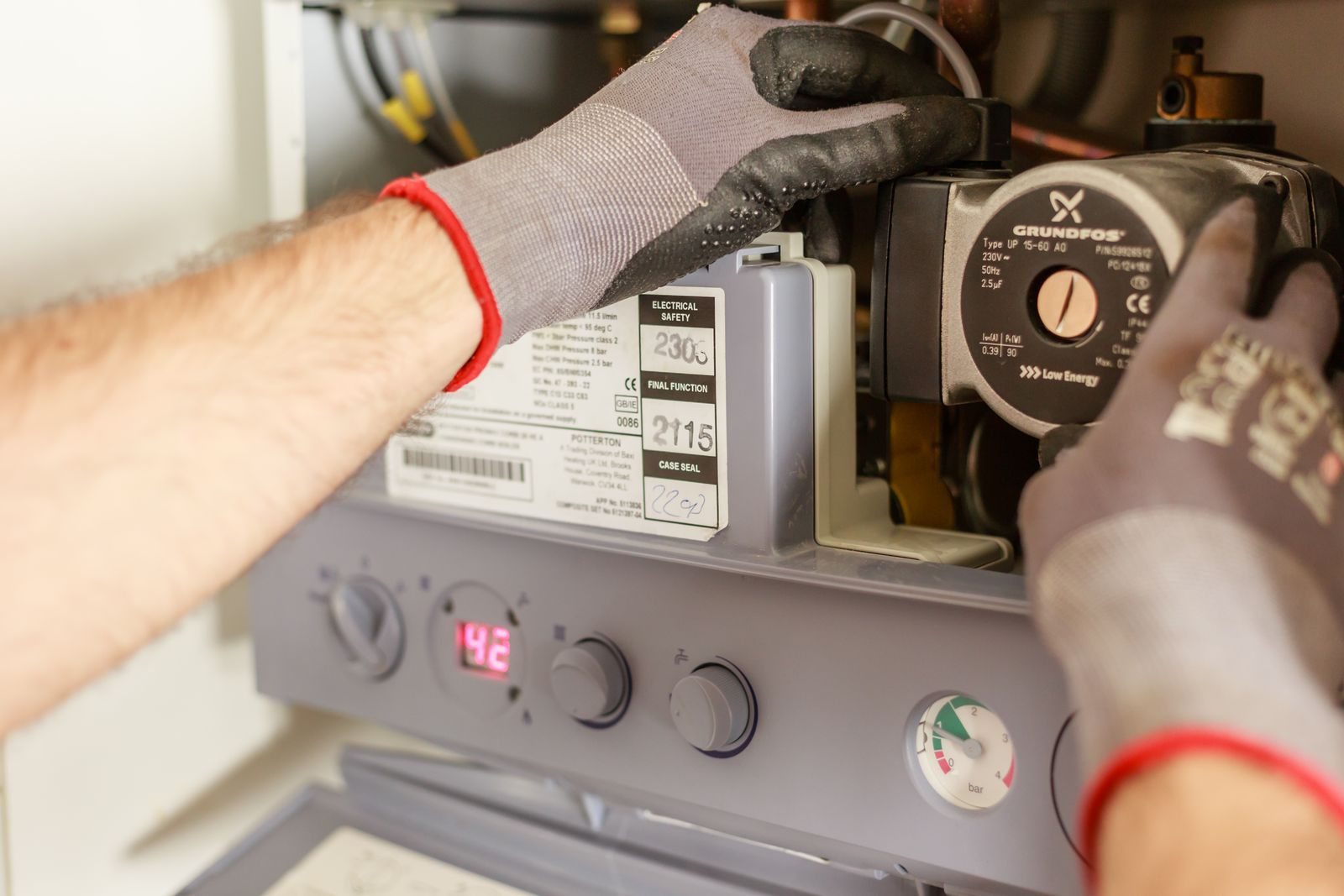
A solid-fuel boiler carries an extra duty. Anyone operating a solid-fuel boiler with a total rated thermal input from 10 to 300 kW inclusive that serves as a heat source for a hot-water central heating system must arrange a check of its technical condition and operation by a qualified person at least once every three years, and submit the report on request to the municipal authority of the municipality with extended powers (Section 17(1)(h) of Act No. 201/2012 Coll., on Air Protection).
What it means for you
- Operating a flue way contrary to the Fire Protection Act can bring a fine of up to CZK 10,000 (Section 78(1)(aa) and (2) of Act No. 133/1985 Coll.).
- If the boiler check does not take place or you do not produce the report on request, a fine of up to CZK 20,000 may be imposed (Section 23(1)(o) and (2)(c) of Act No. 201/2012 Coll.).
- In a tenancy: the landlord keeps the flat and the building in a condition fit for use, while the tenant carries out and pays only for routine upkeep and minor repairs (Section 2257 of the Civil Code).
- Regular inspections and cleaning of stoves, flue pipes and boilers of flat-level heating count as routine upkeep of the flat — the tenant pays for them (Section 2 and Section 4(h) of Government Regulation No. 308/2015 Coll.).
- The chimney, as a common part of the building, remains with the landlord, and in an apartment building with the owners' association. Put in the contract who arranges what and who pays, before you sign.
Source: e-Sbírka: Act No. 133/1985 Coll., on Fire Protection